Product Design · UX Research · Feb 2025
Self-service onboarding for SMB customers — from detractor NPS to roadmap priority.
Challenge
NPS scores for this segment sat in detractor territory — a 3 or 4 out of 10. Research pointed to a consistent culprit: onboarding. Customers got little guidance preparing their data for import. The implementation team picked up the slack. And new customers started their journey frustrated before they'd ever seen the product work.
Customers were frustrated before they'd seen the product work. The implementation team was absorbing pain that should never have reached them.
Research
I pulled from several sources simultaneously: competitor research, customer interview transcripts, implementation team feedback, and internal documentation. Rather than analyzing in isolation, I synthesized across sources to find patterns.
01
Customers were guessing which fields matched. The implementation team was correcting. Both sides were losing time on the same problem.
02
Most swung too far toward full automation — leaving users no visibility into whether the AI had made the right call. Trust was the missing ingredient.
03
Designed right, the same experience could work for customers running imports independently and for the implementation team on complex migrations.
Design
The central design challenge wasn't whether to use AI — it was how much to trust it. I made the decision early to design for human-AI collaboration rather than full automation.
Core mechanism
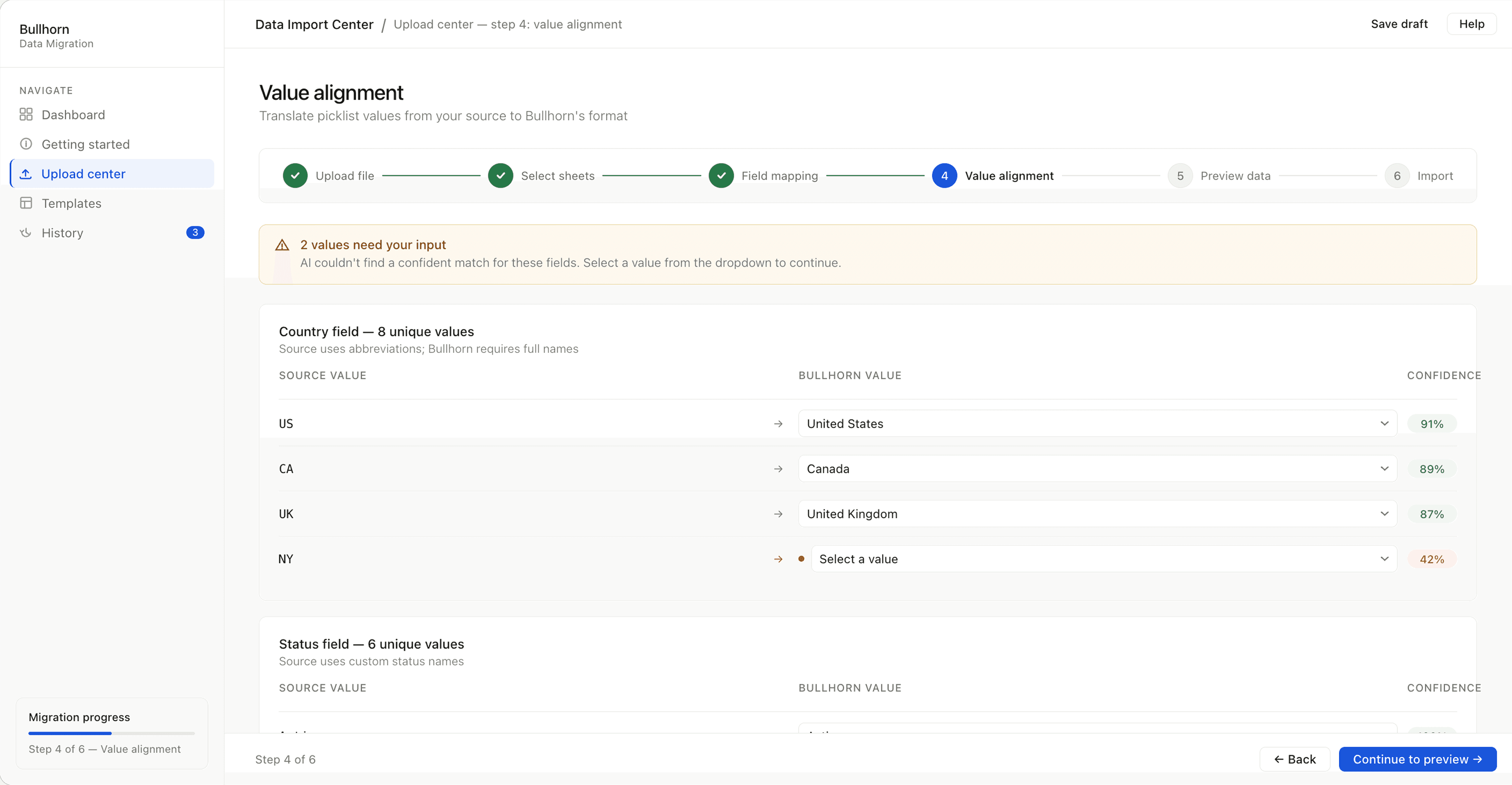
A confidence score on every field mapping. Green for high confidence. Amber for mappings that need a second look. Users scan the table in seconds — accept what the AI got right, correct what it didn't. Control is always visible, never hidden.
This also made the tool viable for the implementation team on complex migrations — not just a self-service product, but a shared tool that improved with every use.
Execution
Seven screens. Full end-to-end flow. High fidelity. Ready to test.
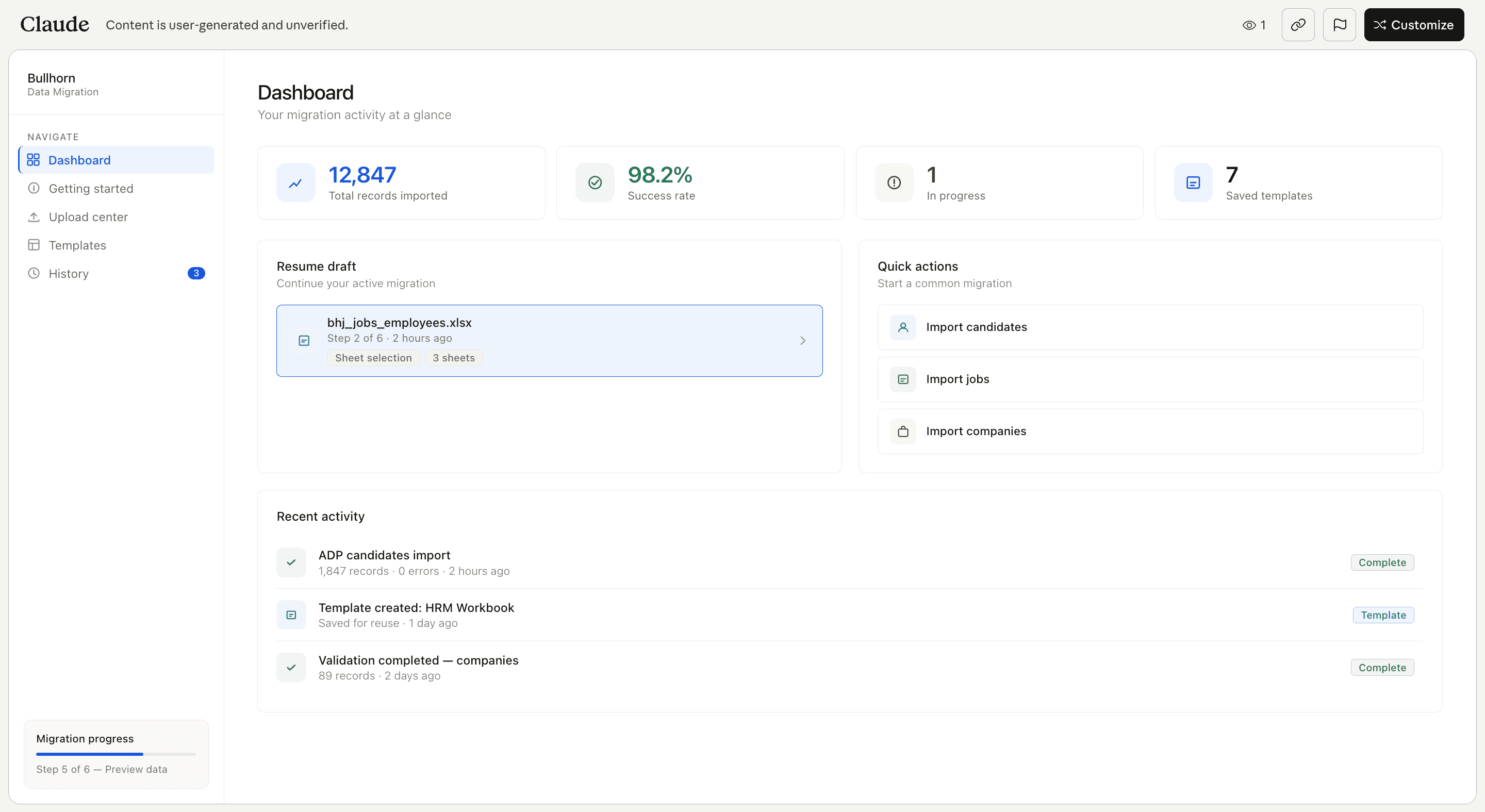
Home base for the migration. A 98.2% success rate is visible before a single action is taken — an immediate confidence signal for users arriving anxious about data integrity.
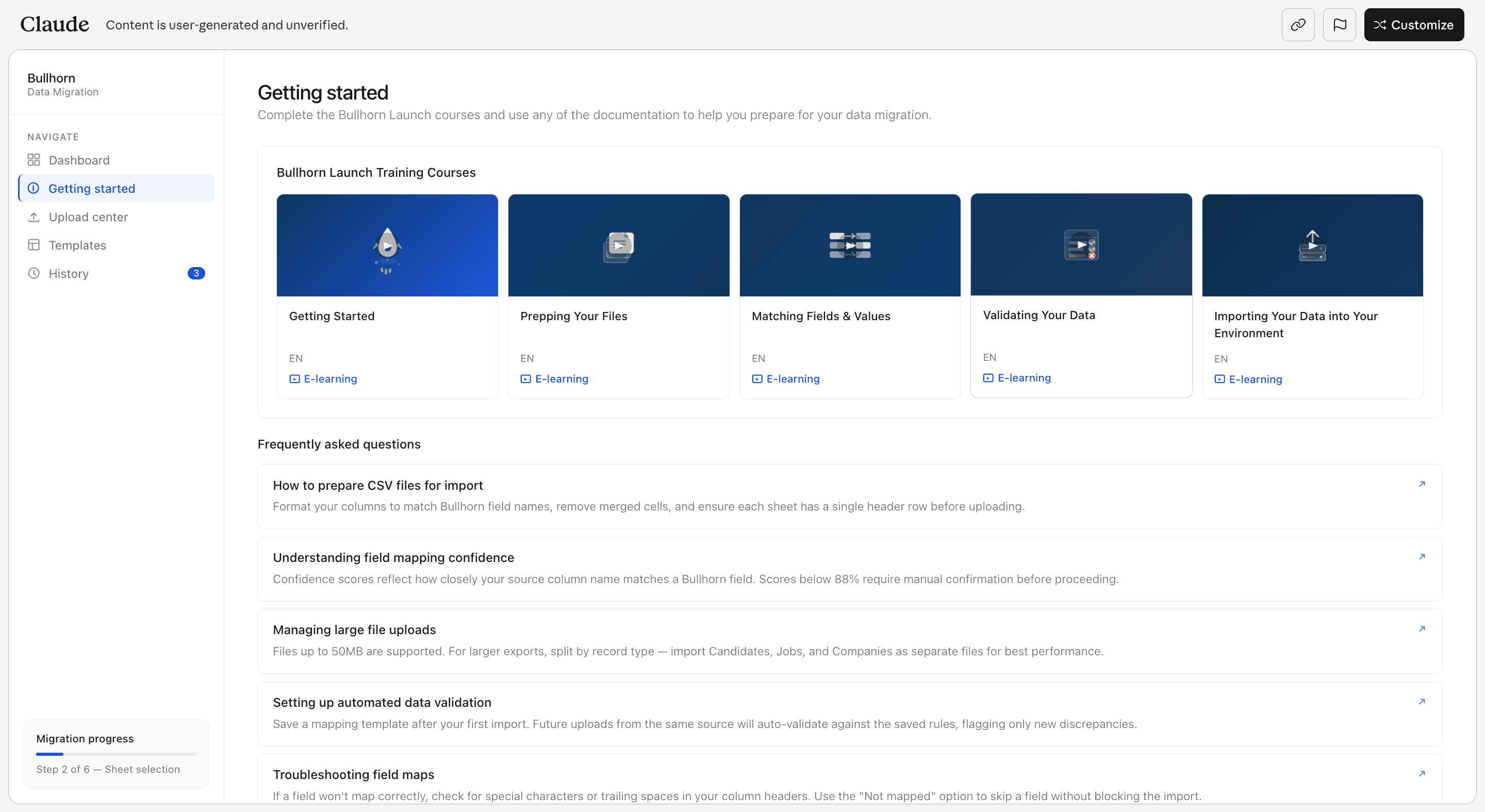
Sets expectations before the flow begins. Most import tools drop users straight into upload and let them figure it out. This step treats orientation as part of the product.
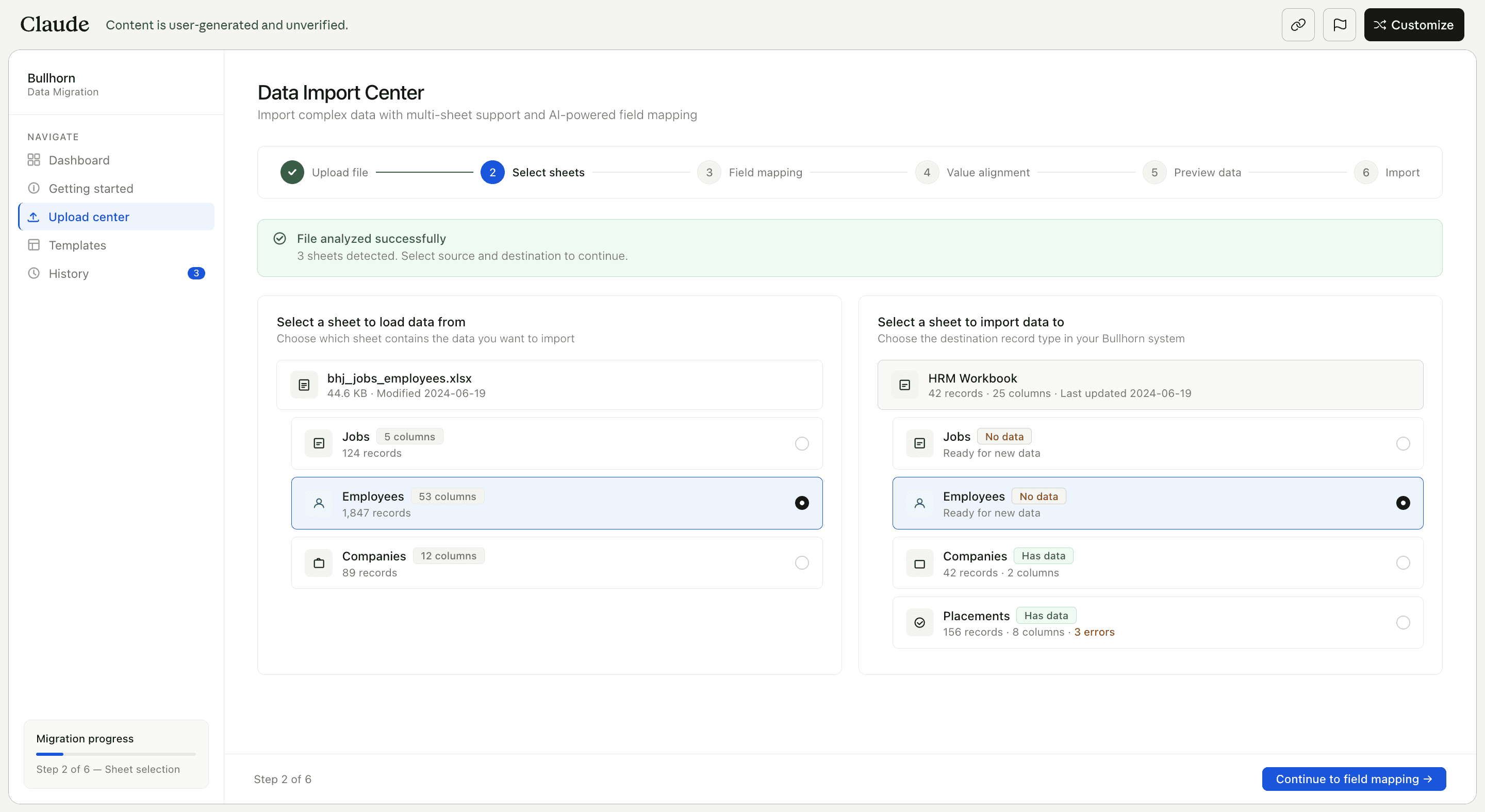
Accepts multi-tab CSV files containing all entity types at once — Jobs, Candidates, Companies — in a single import rather than requiring separate flows per record type.
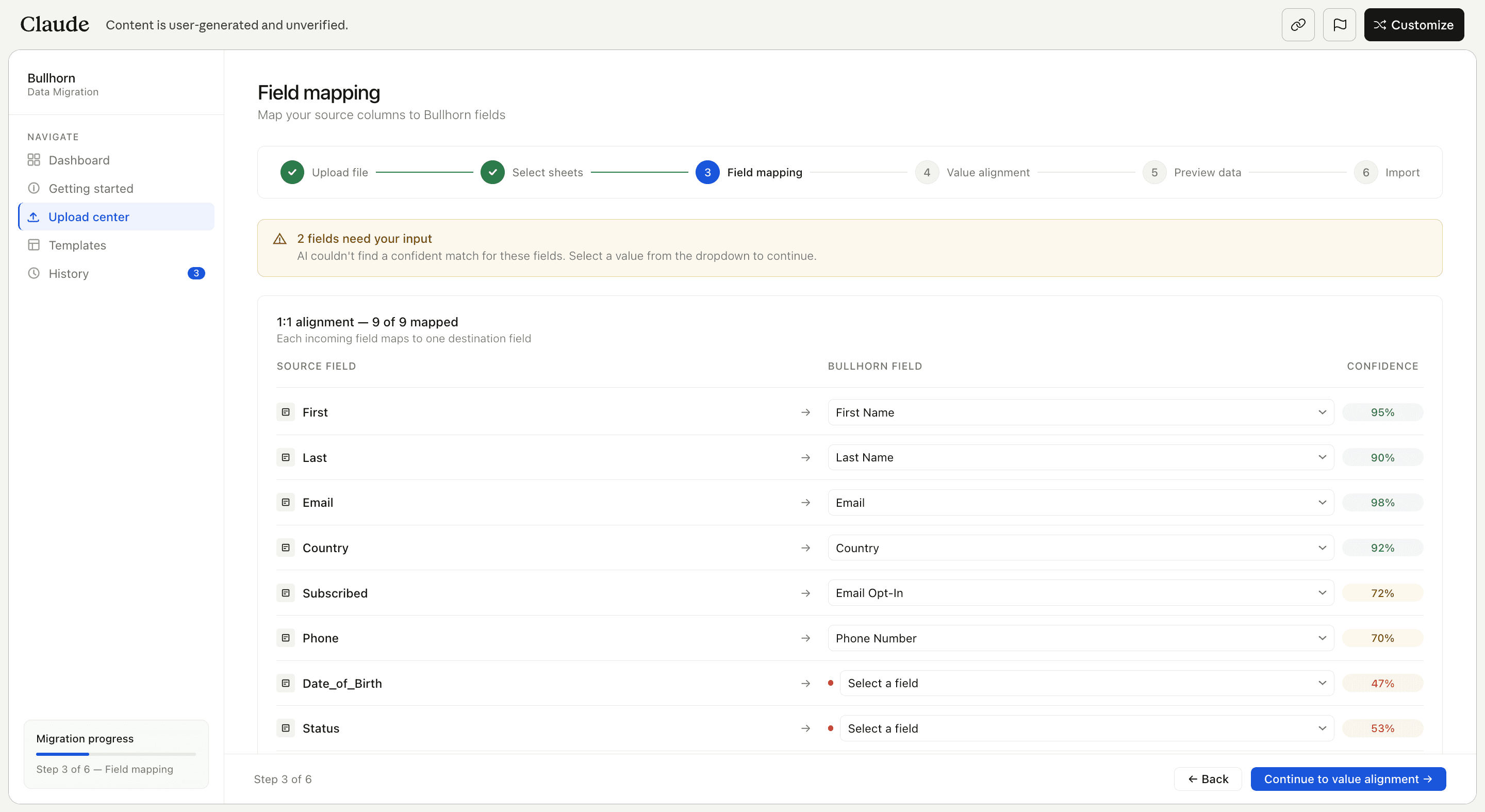
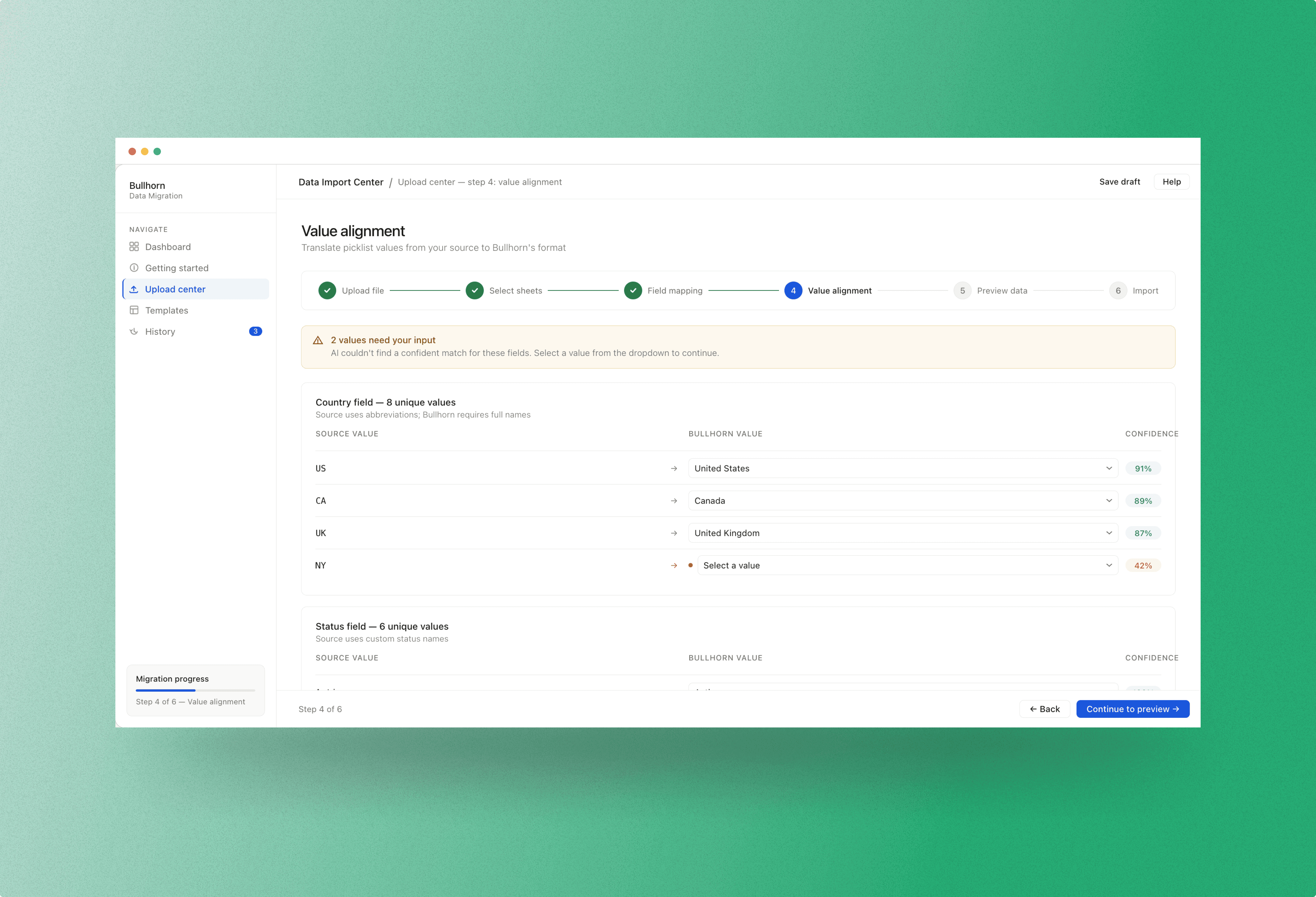
AI suggestions paired with color-coded confidence scores. Green means trust it. Amber means check it. Every field stays editable — users are never locked into the AI's suggestion.
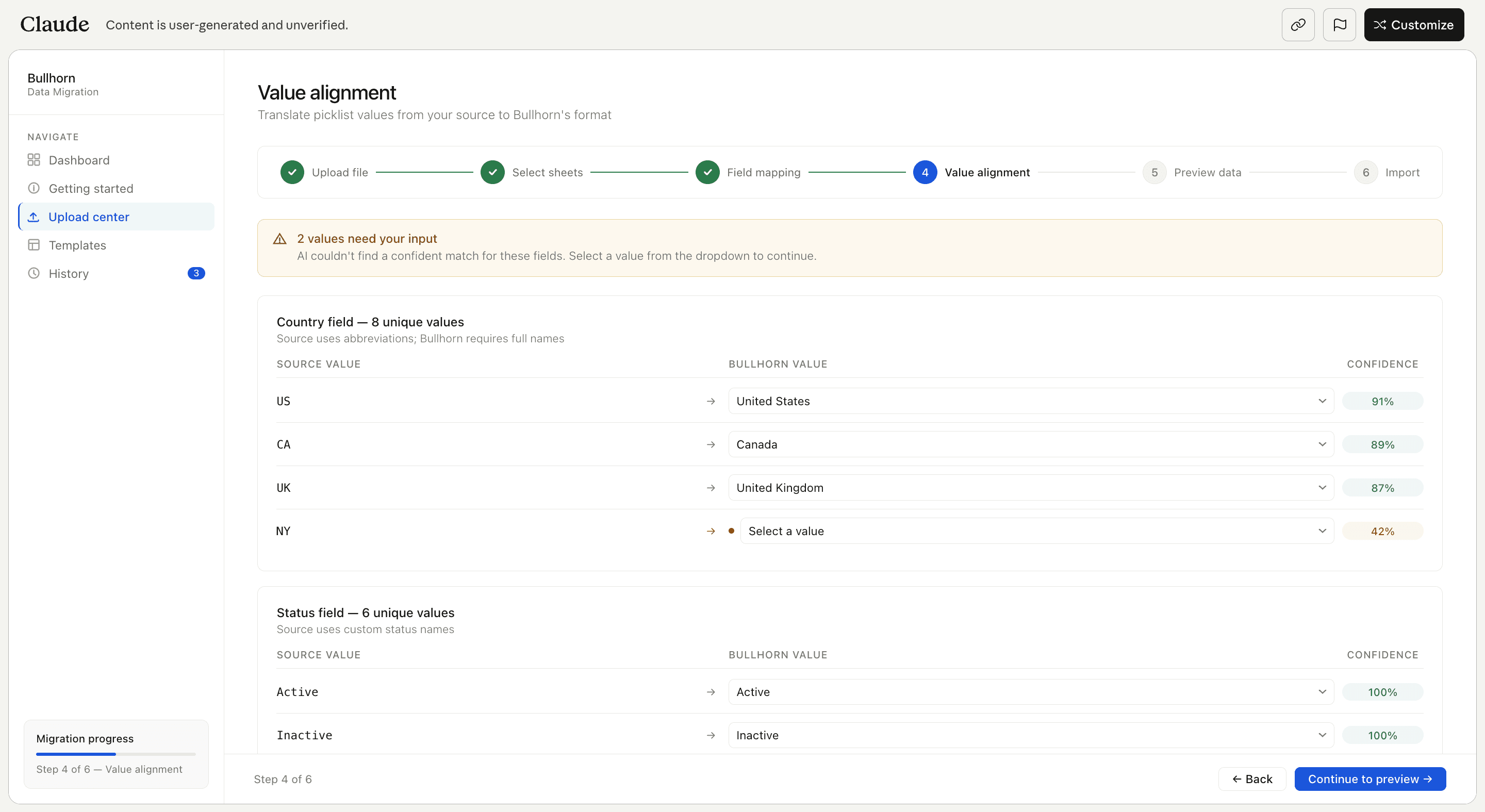
"opp" becomes "Opportunity." "bad fit" becomes "Not a fit." Problems that would corrupt data silently after import are surfaced here — before anything is committed.
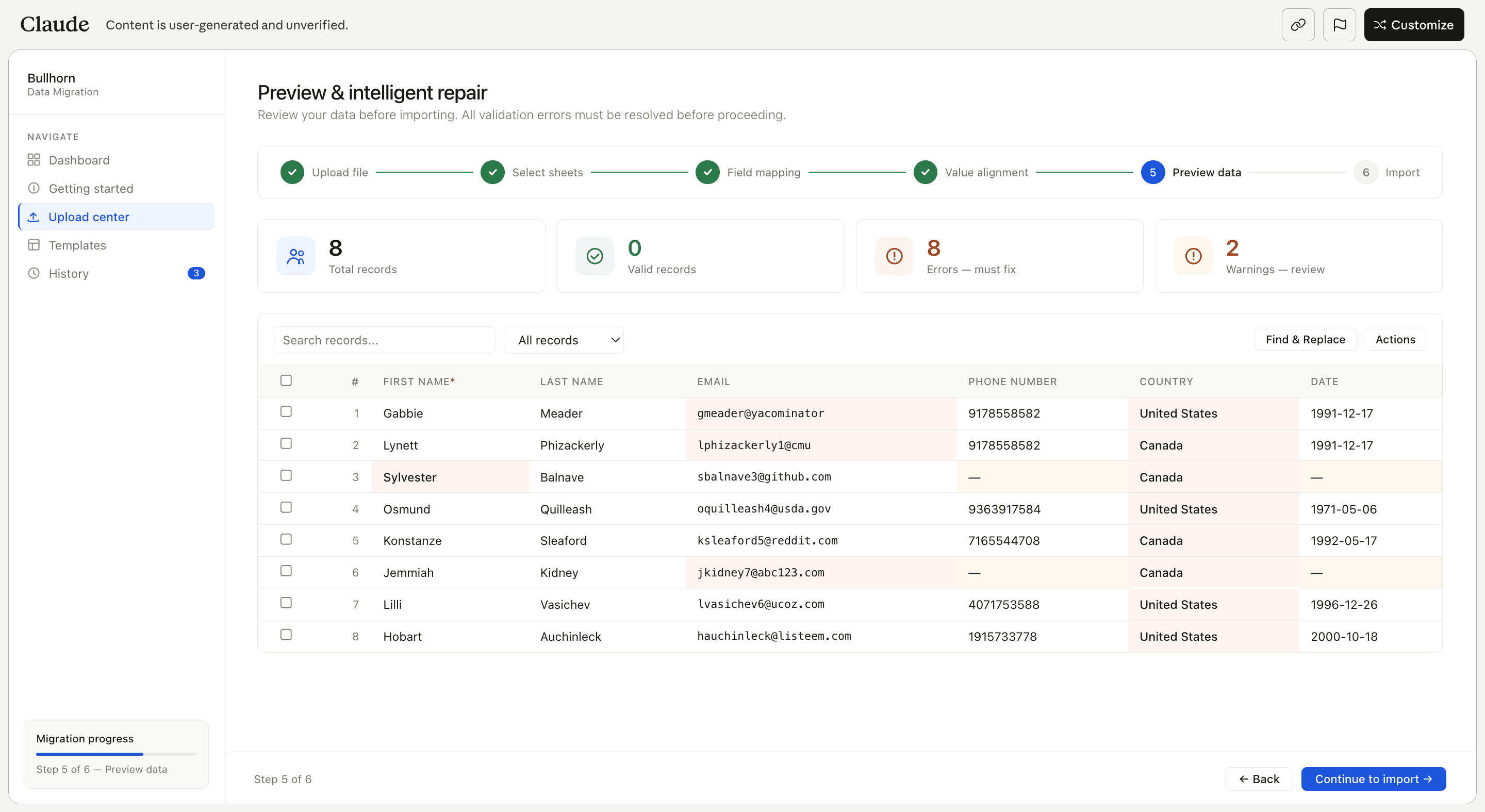
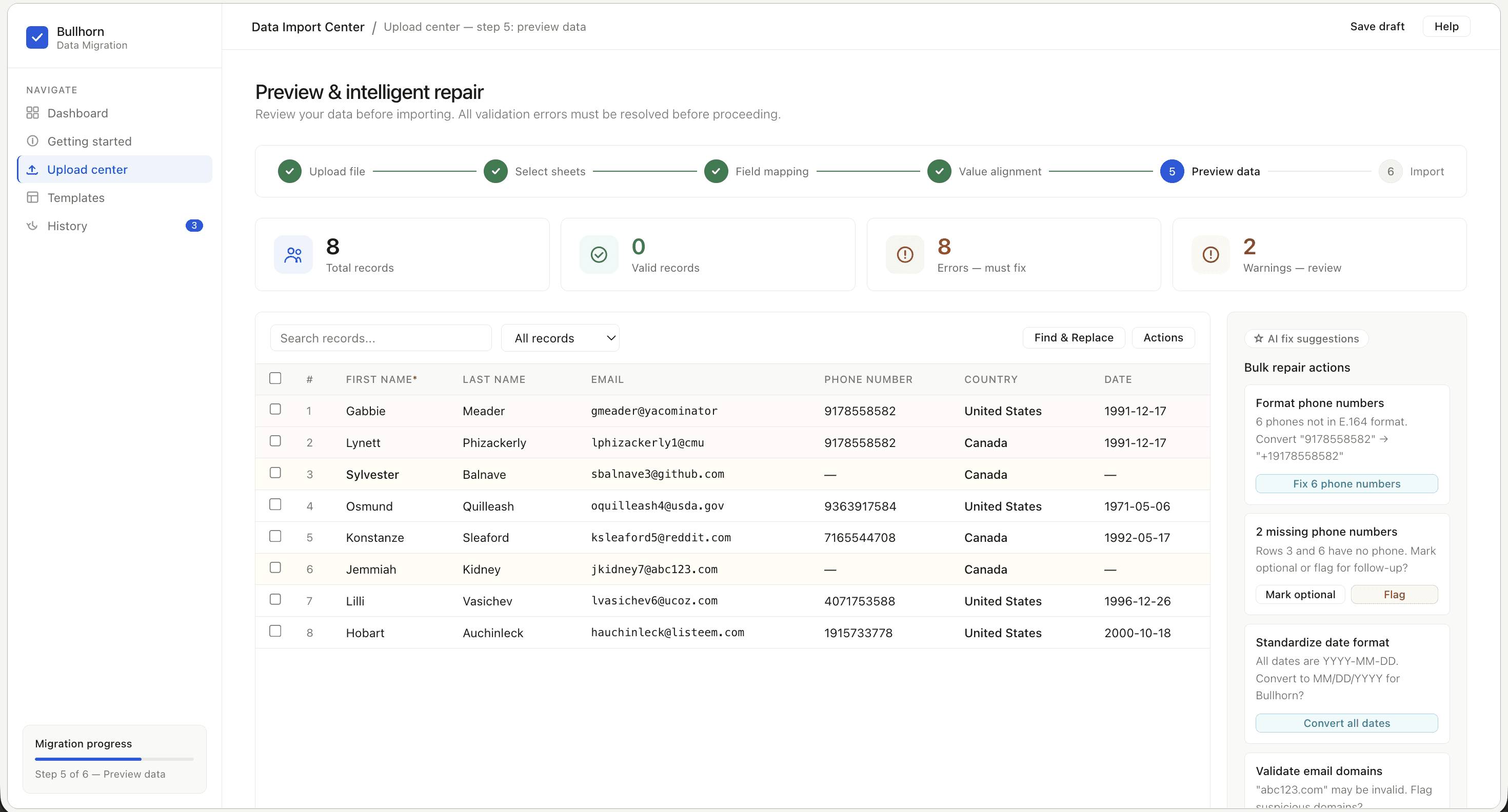
Errors highlighted inline, warnings in amber, Find & Replace for bulk fixes. Nothing imports until it's clean. Catch problems here — not after the data is already in the system.
Results
Zero → Roadmap
This project wasn't assigned. It wasn't on the roadmap. It started as a noticed pain point and became a tangible solution in under two days.
The prototype was validated with the implementation team first — the speed and clarity gave stakeholders something concrete to react to rather than a vague proposal to debate. From there it went to product management and was prioritized.
Zero to roadmap ready. No formal brief. No dedicated team. Just a clear problem, a focused approach, and a working prototype.
Reflection
The biggest lesson from this project wasn't about design process. It was about initiative. Problems don't get solved because they're acknowledged in a planning meeting. They get solved because someone decides to act on them.
AI tools have changed what a designer can do alone. In two days I had a working prototype that stakeholders could touch, react to, and champion. That's a fundamentally different conversation than pitching an idea. A tangible solution creates its own momentum in a way that a slide deck never will.
If you see the problem, you already have everything you need to start.