Self-Service Metric Editing
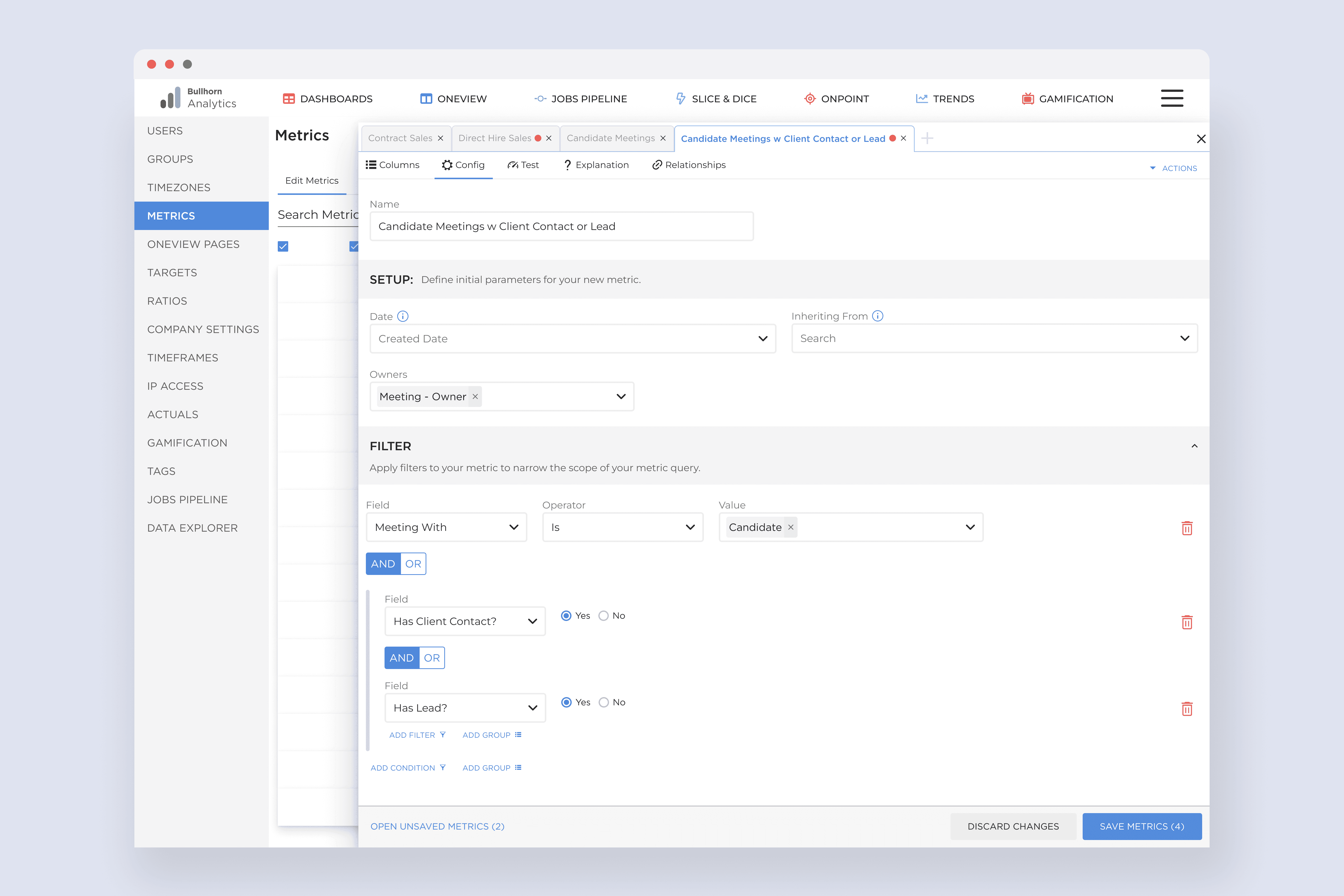
Enabled enterprise users to create and edit custom metrics without relying on support, slashing delays and boosting efficiency.
UX Research
UX Design
Oct 2024
Product Manager, Architect, Product Owner, Lead Front End Engineer
CHALLENGE
Dependency Slowed Everyone Down
Enterprise customers needed tailored metrics to track their unique goals, but only Bullhorn’s Support and Implementation teams could create them. This bottleneck frustrated users with delays—sometimes days—for even small tweaks, bogging down workflows and piling extra work on internal teams.
SOLUTION
Freedom for Users
Give users the power to build and edit their own metrics directly in the Analytics tool, no support tickets required.
APPROACH
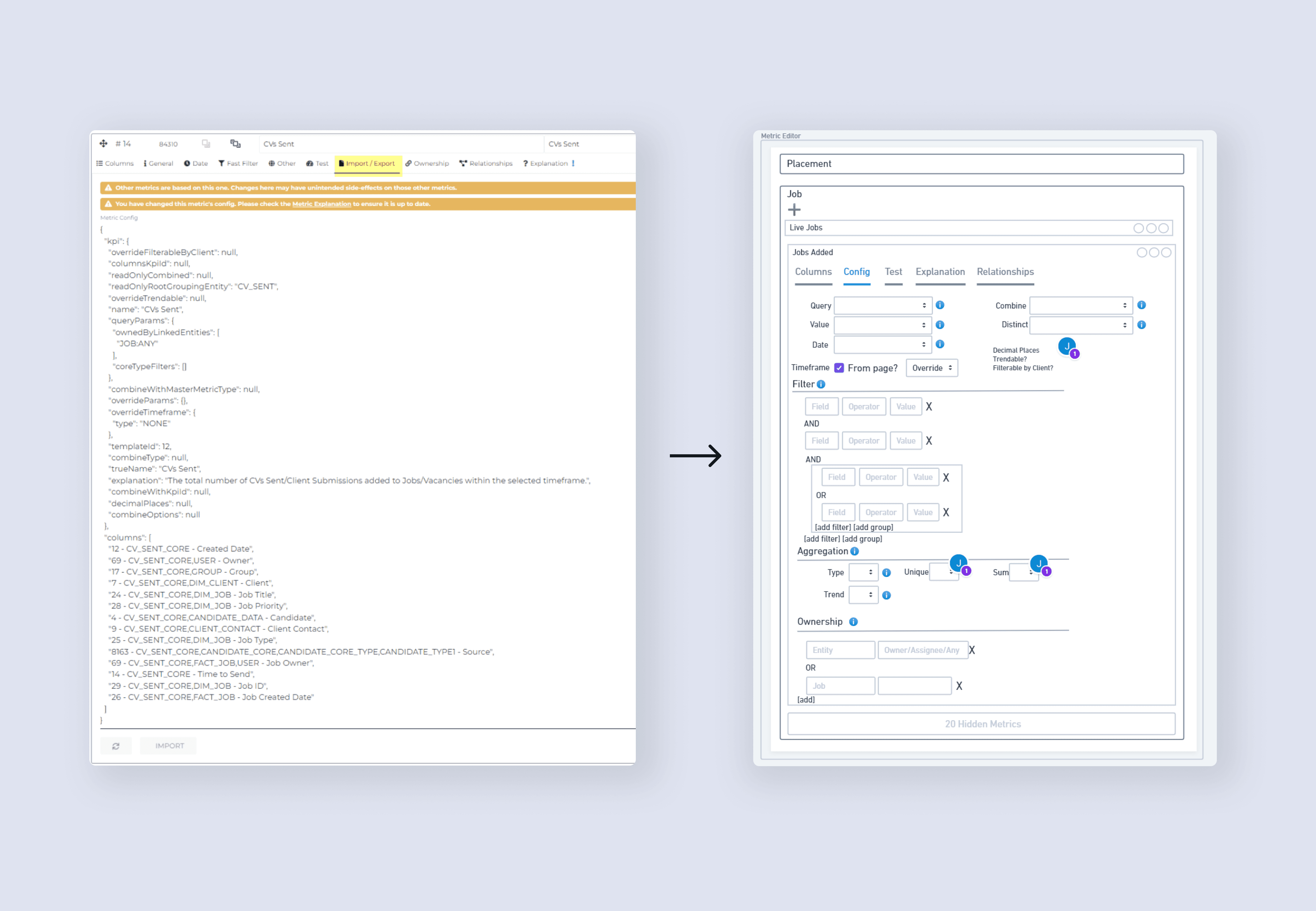
Cracked the JSON Puzzle - decoding the backend to simplify the front end.
I started by shadowing the Support and Implementation teams, watching them demo the existing JSON-based metric creation process—hidden from users—and digging through dense documentation. It was clear: what took JSON wizardry behind the scenes could be simplified for users with the right interface.users the power to build and edit their own metrics directly in the Analytics tool, no support tickets required.
RESEARCH
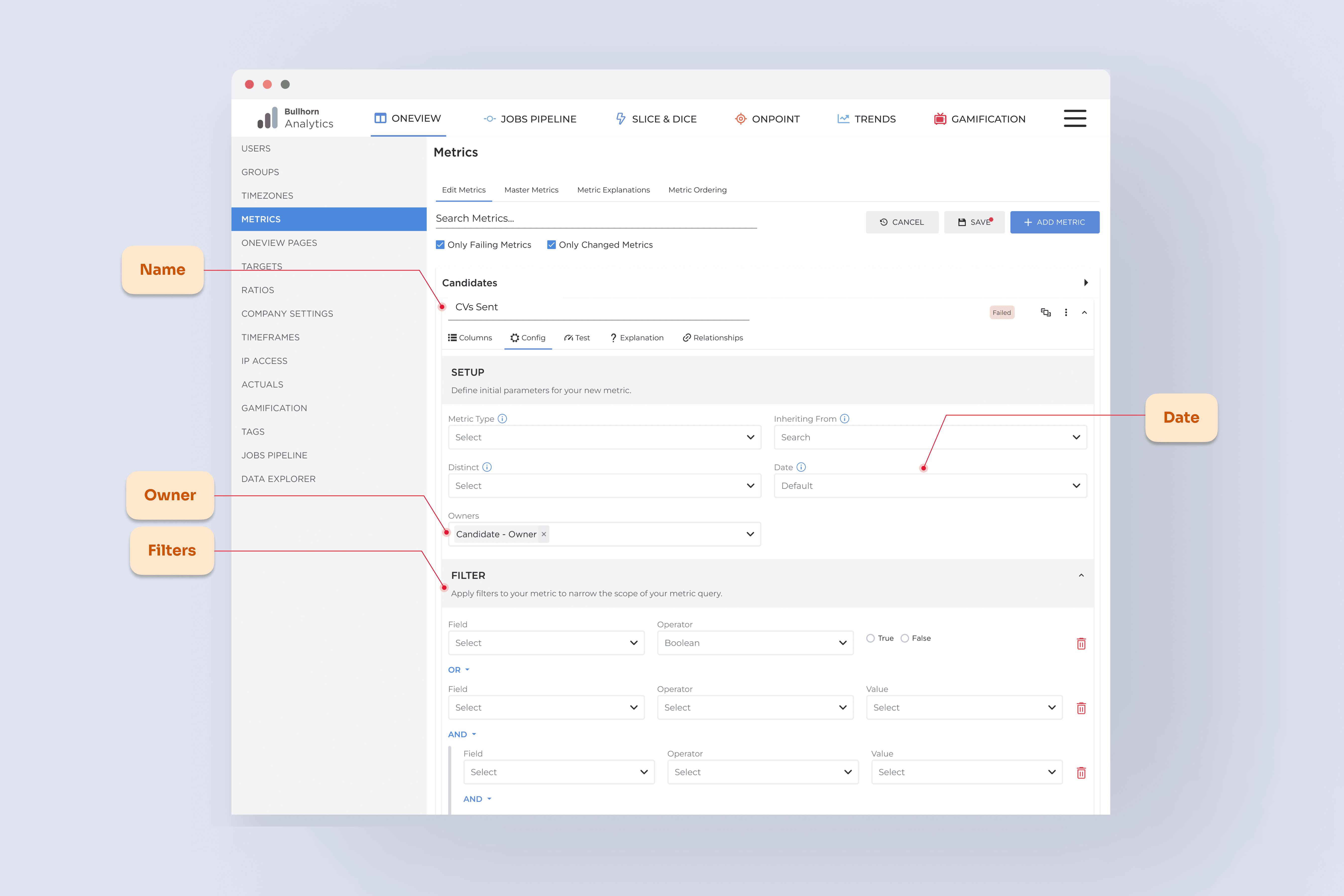
Interviews revealed what users needed to edit most.
I interviewed the Implementation & Support Leader to pinpoint pain points. They highlighted four big asks for them to edit:
Metric names: To adjust the out-of-the-box metrics to match their business terms.
Dates: To determine whether data should be included in a selected timeframe.
Filters: To narrow down the results of this metric.
Ownership: To determine who is credited with the activity
STRATEGY
Built It Step by Step
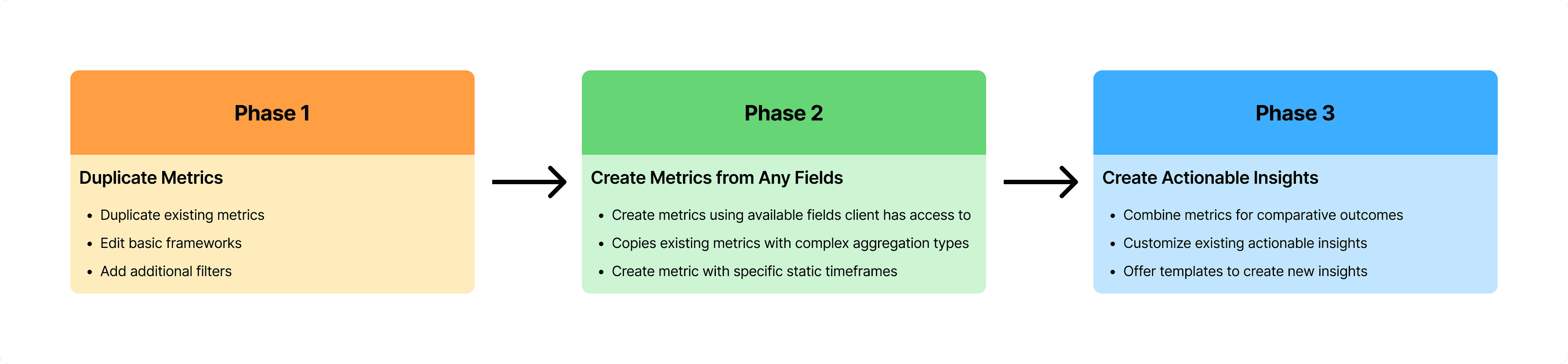
To avoid overwhelming users and our dev team, I worked with the Product Manager and Architect to break it into 3 phases:
DESIGN
Tested Two Paths
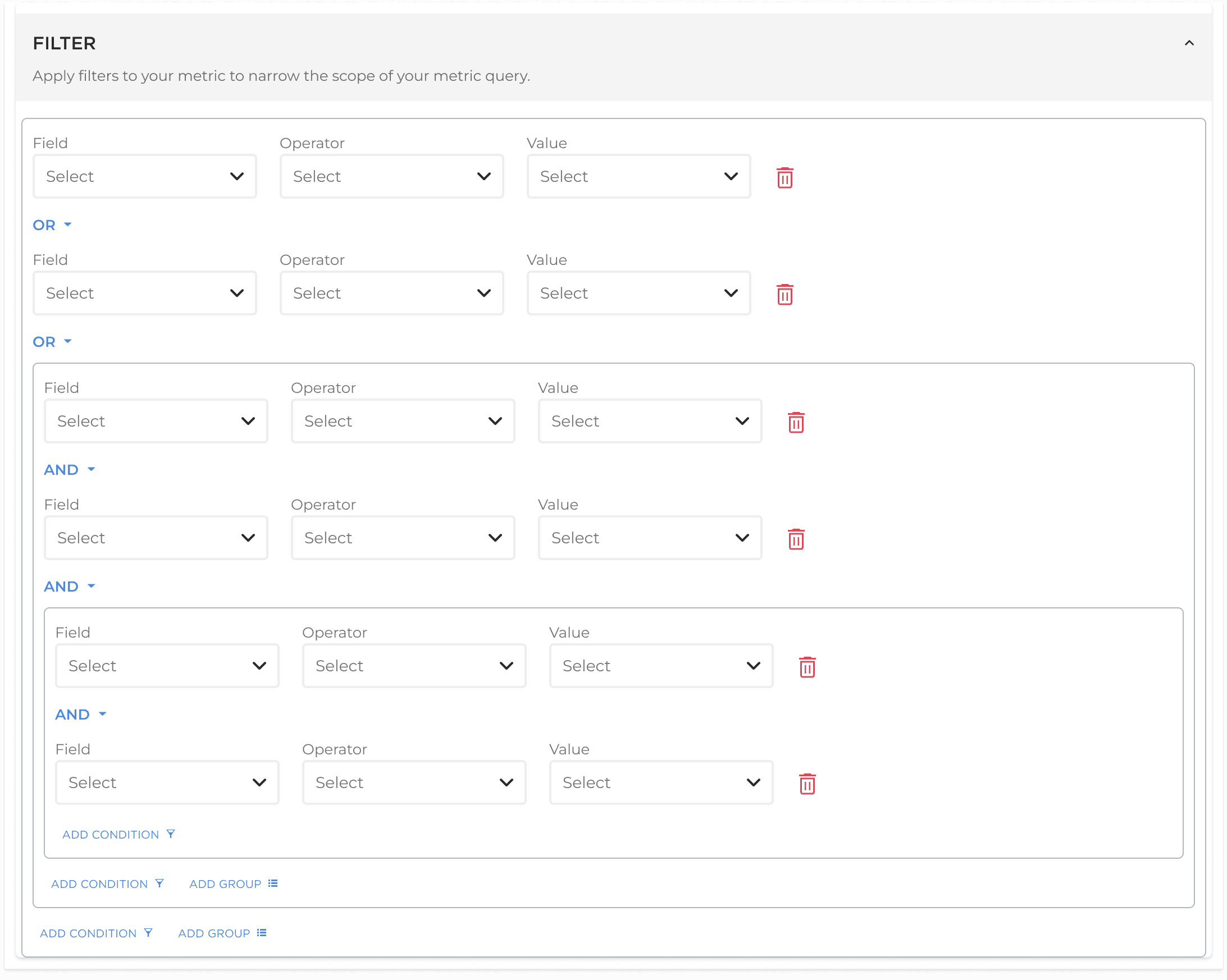
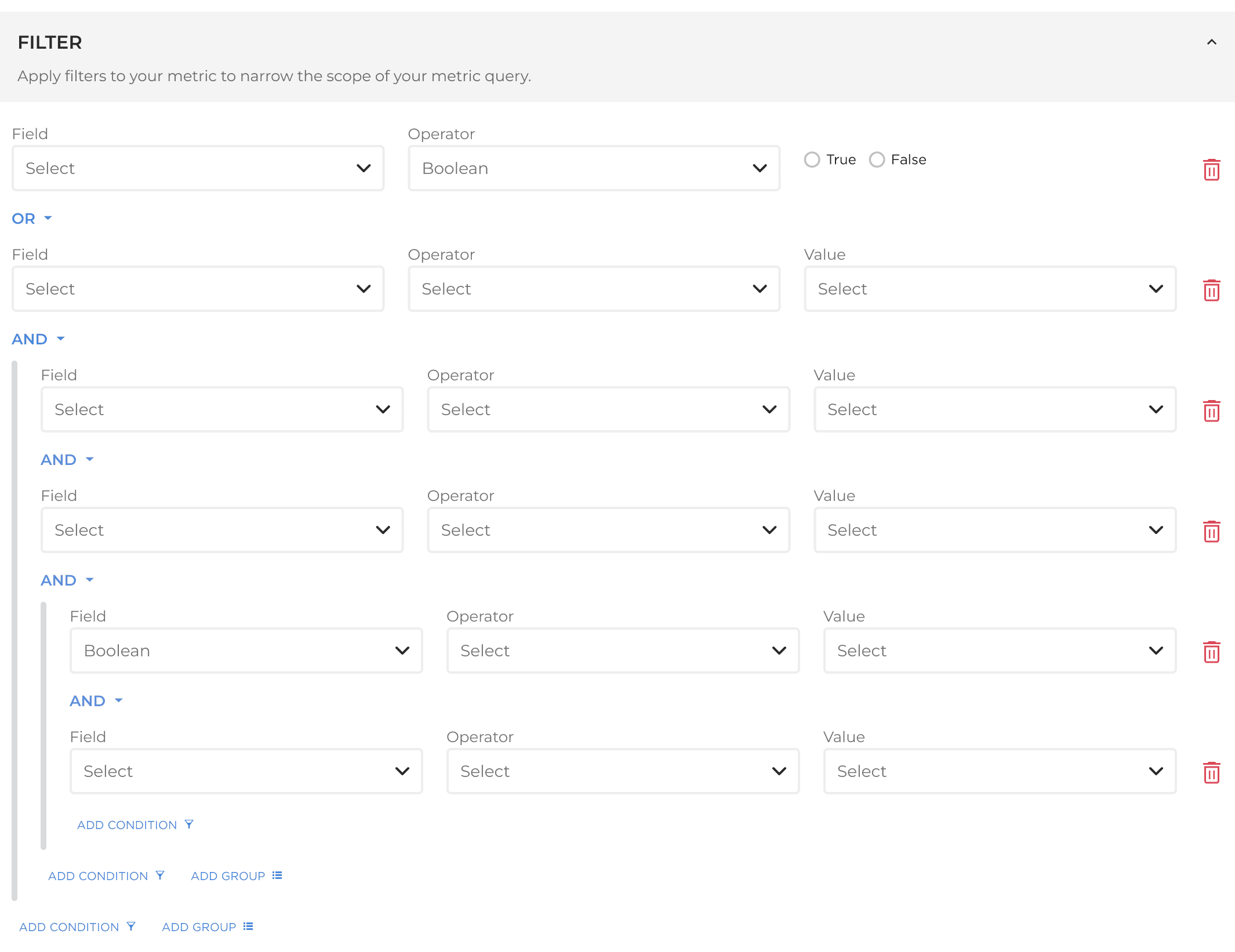
I explored two design patterns: a streamlined form-based editor and a visual drag-and-drop setup. Both aimed to turn JSON complexity into something approachable, but I needed feedback to pick a winner.
Boxed Approach
Uses boxes to make it clear what filters are grouped together
Lined Approach
Uses vertical lines on the left side to group filters together
USER TESTING
Early Users Spoke Up
An early-access customer rated it 7/10. They loved the concept but got lost navigating editable metrics and craved more control. Their input sparked a key tweak: a new drawer UI to spotlight the active metric and clarify what’s editable.
DESIGN
Sharpend the Focus
Post-feedback, I refined the design—adding the drawer, improving visual cues for editable fields, and laying groundwork for future capabilities.
DESIGN
Sharpend the Focus
Post-feedback, I refined the design—adding the drawer, improving visual cues for editable fields, and laying groundwork for future capabilities.


RESULTS
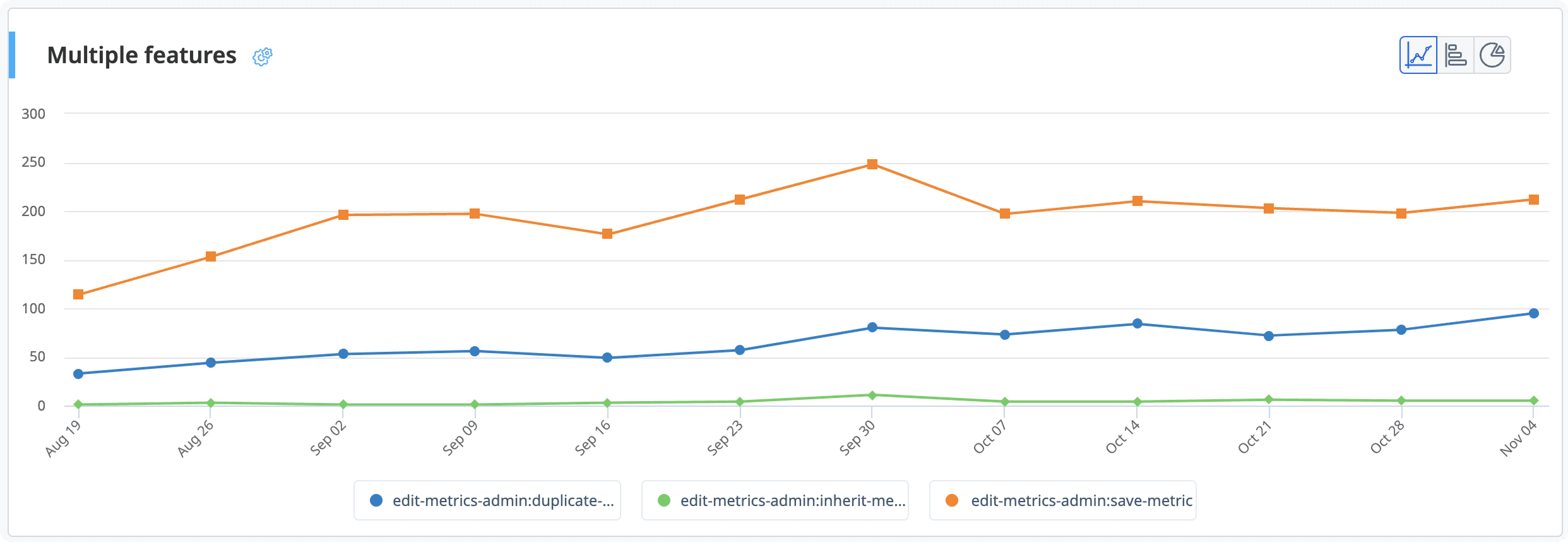
10,000 Tickets Vanished
In the first two months, users edited 10,000 metrics themselves—translating to 10,000 fewer support tickets. Workflows sped up, frustration dropped, and internal teams could focus elsewhere.
TAKEAWAYS
Small Wins Add Up
Testing assumptions early with users beats guessing their feedback flipped my design from cluttered
to clear in one iteration.Breaking big technical challenges into phases keeps momentum high and delivers value without overwhelming the team.
A quick prototype can reveal more than endless planning—real user struggles sparked the drawer that saved the day.